The SECRET ENTRANCE to the Menkaure Pyramid
The SECRET ENTRANCE to the Menkaure Pyramid
The Discovery
The main entrance to the Menkaure Pyramid is in the center of the North Face, as are most all pyramid entrances in Egypt. Around the entrance are granite casing stones which have been smoothed down flat in a large square area, but left to bulge out outside it. Curiously, there is also a square area of smooth finished casing stones right at the middle of the eastern face, though not the southern or western one. Also, the east and north sides have temples, while the south and west do not.
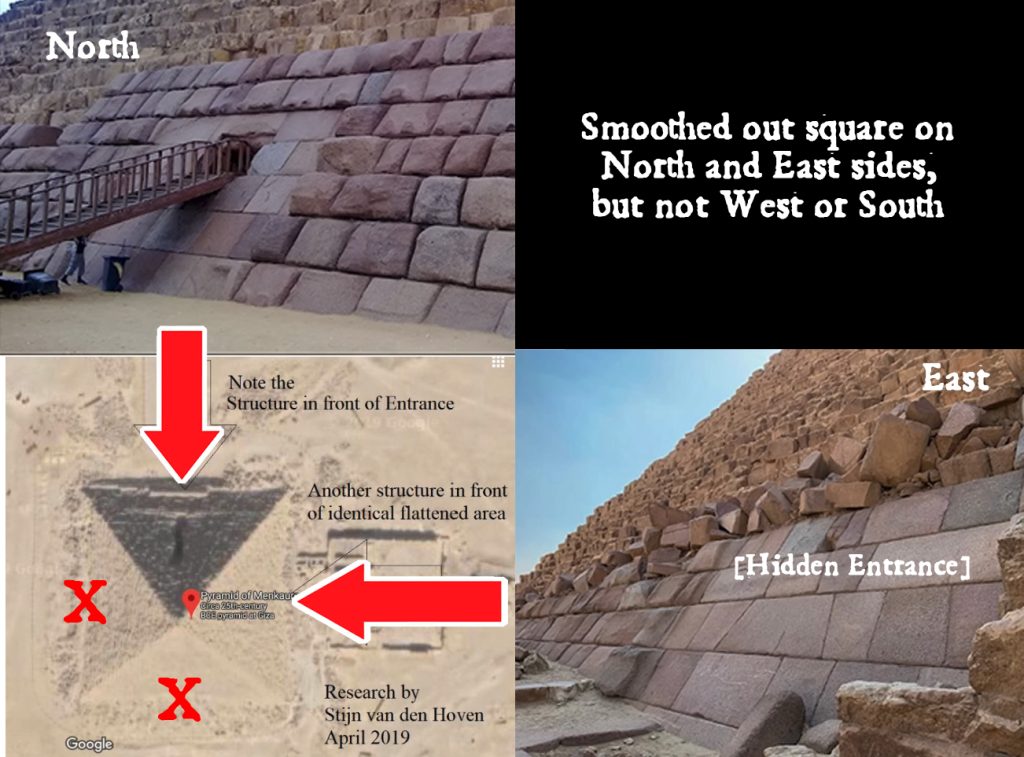
Considering that the north face is mimicked so exactly by the eastern face, Stijn proposed that the smooth flat area on the eastern face also likely concealed an entrance at its center. He published a paper called
Hypothesis: The possible second entrance into the Menkaure pyramid [LINK].
It was a very promising idea, and he shared it with Egyptian officials in the hopes that they would investigate it. Then, in 2025, a team including many members of the ScanPyramids Project, used several methods to scan the area and found that Stijn was exactly correct in his hypothesis. They found a void roughly one meter tall and 1.5 meters wide in the dead center of the smooth casing stones, exactly like the main entrance in the north, just as Stijn predicted!
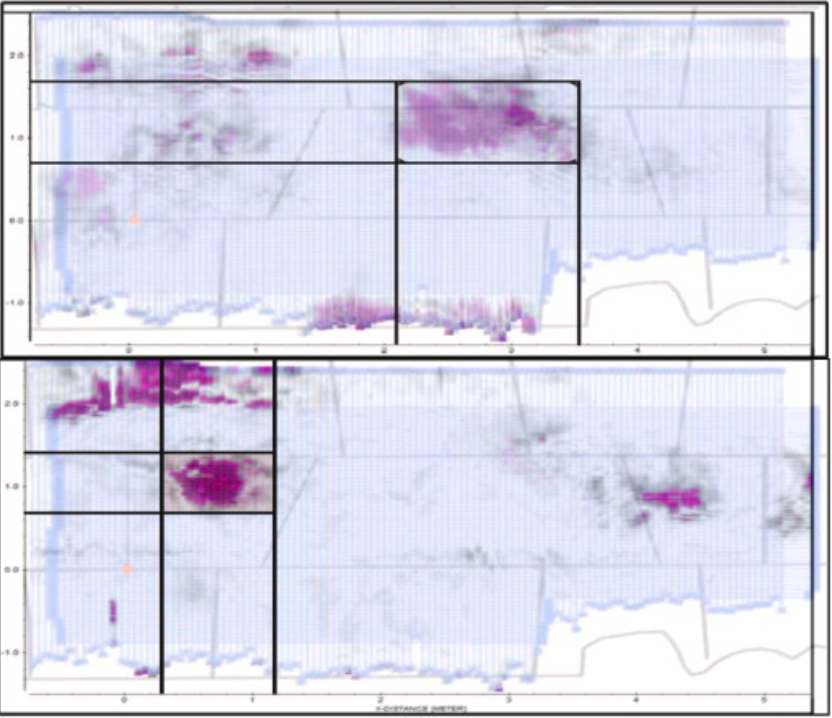
They also found a second anomaly just to the left of it, though smaller. Both were determined to be roughly a meter from the surface, meaning they are blocked by only one layer of casing stones. By carefully removing just one or two stones, we could enter this passageway and find out where it leads. In fact, Stijn has organized a fundraiser to finance further investigations [LINK].
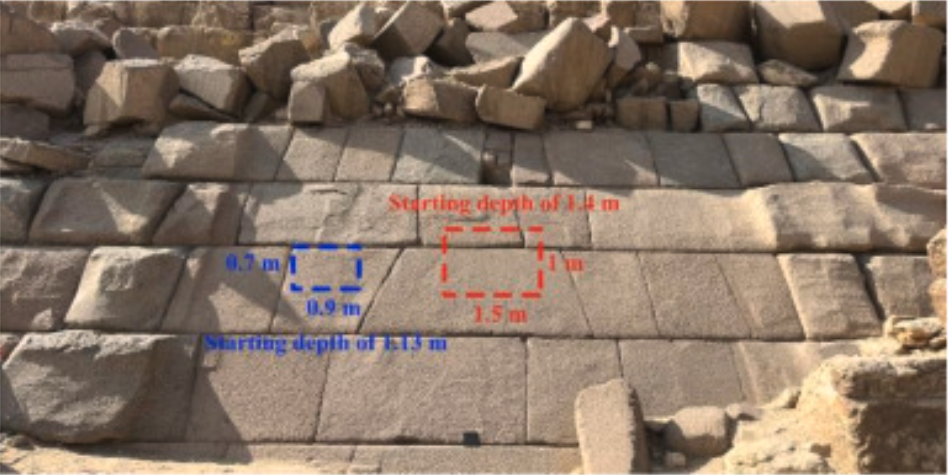
Due to its central, very prominent position, and given the information in the report, it is safe to assume that this is not some robber’s tunnel from a later date, but clearly an original part of the pyramid design leading to something so special, it must have been intentionally concealed whenever the granite was added. This likely occurred in the Fourth Dynasty, during Menkaure’s reign, though the tunnel itself, or the chambers it leads to, may well be far older.
If it truly is a ‘mirror image’ of what is in the north face, we can expect that it descends straight down at a slope of roughly 26 degrees to subterranean chambers. Based on the recent SAR scans from the Khafre Research Project, including Filippo Biondi, Corrado Malanga and Armando Mei, we must ask if this new passage directly connects to what they describe as massive tubes wrapped with spiral formations descending over 600 meters to cubic structures below. Certainly, this would be a secret worth concealing with a riddle in granite.
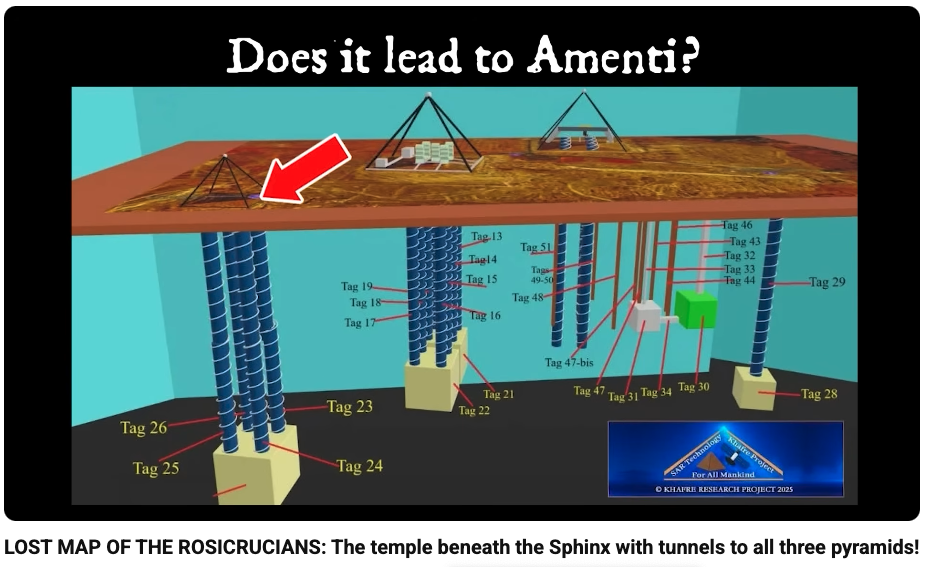
In a previous video [LINK], I revealed a map from 1932 that shows tunnel connections from the Sphinx to all three pyramids, and in all three cases, the tunnel arrives at the center of the pyramid’s eastern face. This indicates that the new Menkaure entrance may very well connect to the tunnel system that would give access to all three pyramids, and any potential as-yet-unknown chambers within them!
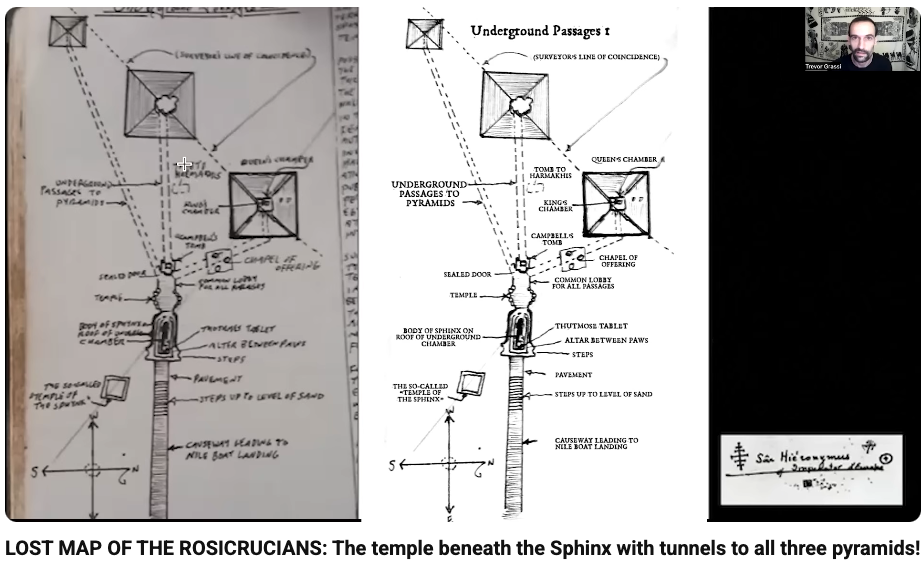
As I mention in my interview with Stijn, I have also been studying a great deal of evidence, along with William Brown, regarding eastern entrances into the Pyramids of Khufu of and Khafre as well. It would seem that all the main entrances to the pyramids are in the north, but all the secret entrances are from the east, and concealed underground. In our SECRET UNDERWORLD OF GIZA series [LINK], we share all this evidence, and in Part Seven (coming soon), we will share even more!
Therefore, the discovery of this new entrance is a major breakthrough, and we must all hope that we can find a way to discover where it leads, without causing any permanent damage to the pyramid. For more information about the discovery, see the first report here:
Ancient Architects: A Secret Entrance into the Giza Pyramid of Menkaure? [LINK]
And the second report: History for Granite: Where Does the New Pyramid Void Lead? [LINK]
Besides this incredible new discovery, Stijn and I also discussed some other highly significant clues that could lead to further major breakthrough discoveries at Giza and beyond. I first began talking with him years ago, when he had proposed another major discovery. He suggested that the Pedestals of Biahmu in the Fayoum Oasis, roughly 90 km south of Giza, were actually the foundation remains of the two ‘lost pyramids’ of King Moeris. The two pyramids were described by Herodotus and others as rising directly from the middle of Lake Moeris, which has been considerably reduced in size since dynastic times, and is today called Qarun Lake.
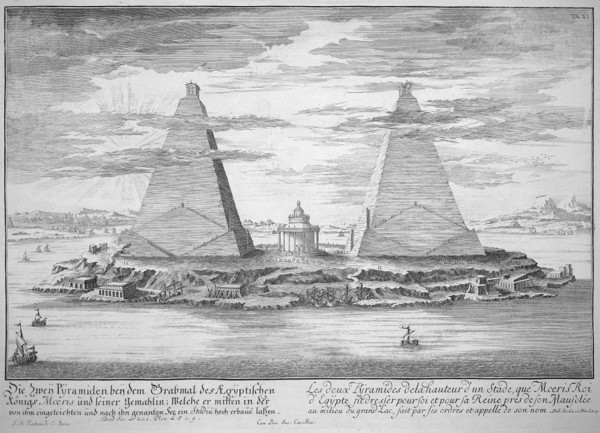
The pyramids are gone today, and no one has ever known their original location, but Stijn’s proposal is based on a logical analysis of all the historical accounts and makes a very strong case for the pyramid’s location.
Herodotus lost pyramids and tomb of King Moeris, Stijn Van Den Hoven [LINK]
Earth Ancients, Stijn on Herodotus Lost Pyramids [LINK]
Matt Sibson of Ancient Architects also covered this story here:
In our interview, we also discussed another mystery on the Giza Plateau, which may point the way to further concealed chambers within the Great Pyramid. The clue comes from the subterranean structure to the East of the Great Pyramid known as the Trial Passages, as they are often considered to be a ‘practice run’ for constructing the ascending and descending corridors within the pyramid.
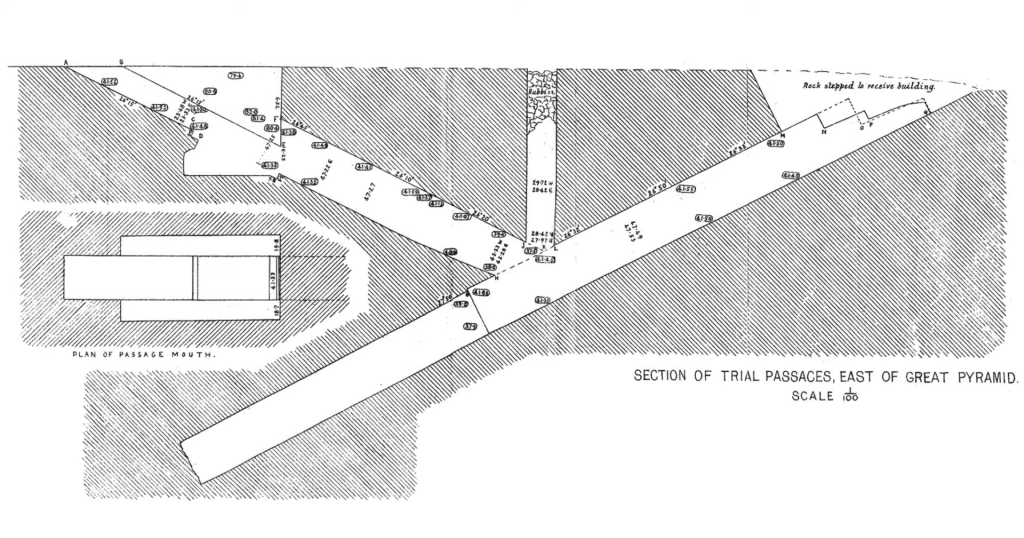
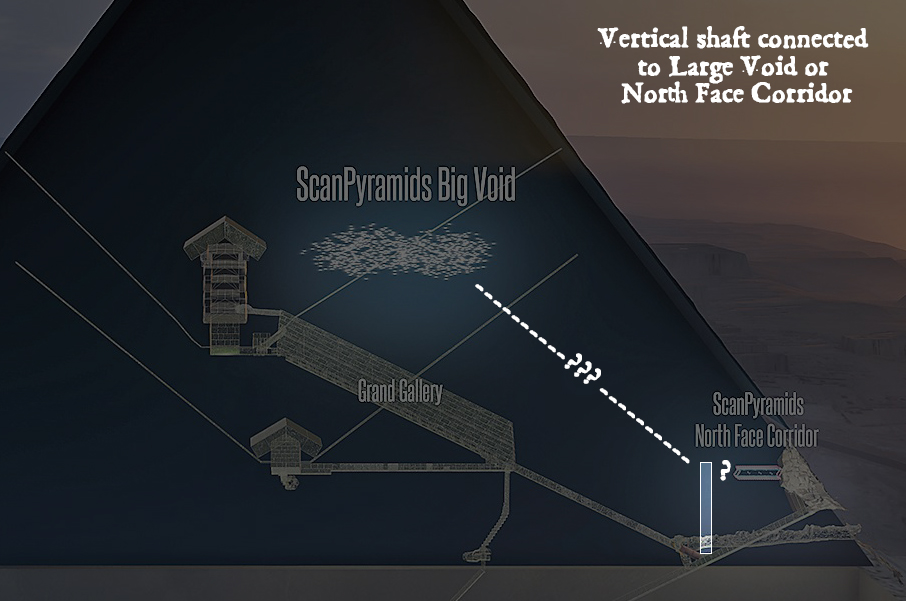
They are oriented at the exact same angles, perfectly mimicking the intersection in the pyramid, but with a hidden twist; a vertical shaft ascending straight upward from the intersection. This extra feature is found in the Trial Passages, but in the pyramid, we can only speculate if it exists or not, as a large granite plug stone is currently in place that Stijn and I both believe could be concealing the extra shaft. This suggestion was also proposed by Mark Foster in his paper THE TRIAL PASSAGES: A MESSAGE IN STONE? [LINK], and also by Matt Sibson in his video titled The Key to Unlock the Great Pyramid of Egypt: The Trial Passages [LINK].
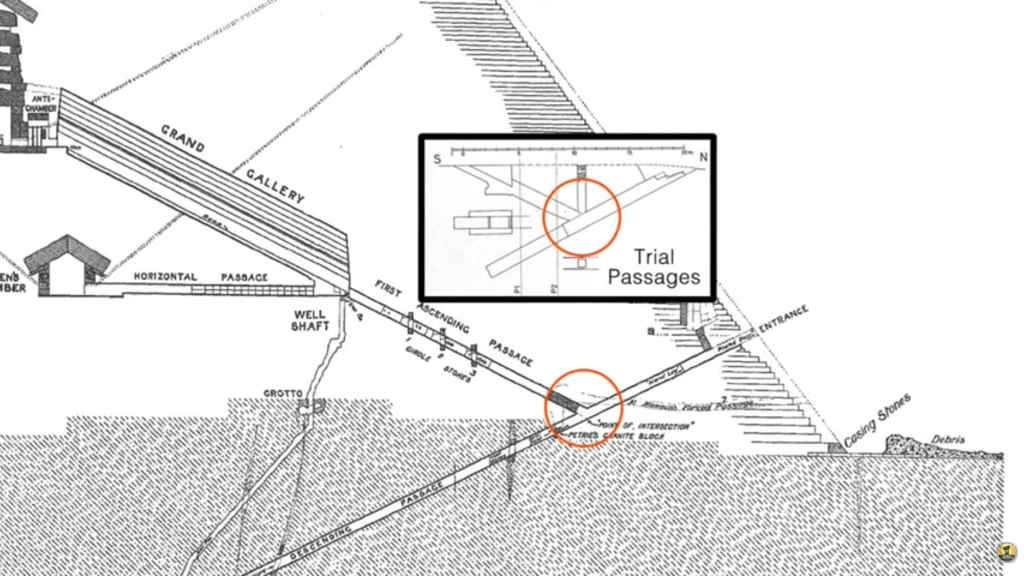
This is another extremely significant suggestion, as the ascending shaft may very likely connect into the North Face Corridor or the Large Void above the Grand Gallery; the two structures detected by the ScanPyramids team, as well as the Khafre Project, only in recent years.
With one of Stijn’s predictions completely confirmed, perhaps we can follow up on some of these others leads as well, and hopefully, we can find a way to explore the new entrance into the Menkaure Pyramid in coming years.
SUPPORT this project:
Open a hidden secret entrance at the Giza Menkaure pyramid [LINK]
FOLLOW/Contact Stijn: https://x.com/StijnvdHoven
Additional papers by Stijn:
The Other Menkaure Quarry, Stijn Van Den Hoven
On the dating and meaning of the great Egyptian Sphinx, Stijn Van Den Hoven
Why they build pyramids worldwide, the volcanic connection, Stijn van den Hoven